

The Homeostatic Operating System for Enterprise
Most companies fail not because of poor execution, but because they don't build systems that are stable and adaptable for growth. A homeostatic system keeps your business balanced and working, even as things change.
Redesigning how work, thinking, and systems function, to align with real human behavior rather than fighting it.
Arcstone is developing a system that sees what's happening, designs what should happen, and closes the gap between them, to provide the opportunity for every organization, regardless of industry or size, to obtain stability.
Like how planets stay in orbit because forces are balanced, Arcstone wants to help your business stay in motion without spinning out or collapsing.
Our designs help organizations reshape how work, thinking, and systems operate, ensuring they align with genuine human behavior rather than oppose it.

Our Vision
Arcstone is pioneering a new category: Cognitive Infrastructure. It’s the layer between people and systems that determines whether work actually flows, or quietly breaks down.
Most systems are built on a flawed assumption: that people are linear, work is task-based, emotions are noise, and time is the only constraint. The problem isn't that people or organizations lack capability, but that the systems surrounding them weren't built for how humans actually operate.
Overwhelm, miscommunication, broken processes, and burnout are symptoms of that mismatch. The goal is systems that adapt to humans and not the other way around.
Arcstone operates on this truth: humans are dynamic systems, not static workers.
That distinction changes everything about how we design.
Burnout is not a personal failure but a structural one
Layered In Science
Every system can achieve homeostasis, and stay stable when three things align

Pace → Velocity
(Motion + Temperature)
How fast things are moving and whether that pace is sustainable.
-
Too fast: burnout, mistakes, and instability surfaces
-
Too slow: stagnation, missed opportunity, and system damage emerges
Priorities → Gravitational Force (Gravity)
What actually matters and what's pulling attention, decisions, and resources.
-
What are the real priorities vs stated priorities
-
What leadership actually responds to
-
What people feel pressure around
System Design → Orbital Shape
(Structure + Human Layer)
How the work is structured and experienced in reality, not how it's supposed to work on paper.
-
Workflows
-
Processes
-
Communication paths
-
Emotional + Cognitive load
This is the layer that most organizations and systems ignore but the one that determines whether the system holds or collapses.
When any of these fall out of alignment, the system drifts, which creates friction, burnout, or breakdown.
A system can have the right priorities and the right pace, and still fail if the structure doesn’t support how humans actually work
In Development
Arcstone is not task management; it is a Homeostatic Operating System for human enterprise.
Arcstone’s strategic value lies in its innovative, multi-layered architecture, which senses, interprets, and stabilizes operational and cognitive state rather than managing tasks. The combination of the following fundamental forces, connected by our memory lattice, creates our proprietary cognitive architecture, which enables the three critical layers required for homeostasis to be observed. It's so that leadership can see their organization clearly, understand its motion, recognize its own patterns, and choose a direction to navigate.
Many systemic challenges stem from how incentives, communication patterns, and cultural norms interact, especially when emotional awareness isn't prioritized. However, energy suppression doesn't create stability, but instead building structure to hold that energy is the difference between rigid systems (low energy, high control) and chaotic systems (high energy, low structure). Arcstone builds high energy + high structure = generative systems.
Because we know that if you optimize for alignment first, efficiency will follow.
Coming Soon
Arcstone principles are coming to individuals as context and orientation systems, launching on Notion Marketplace soon.
Arcstone OS
Recursive Enterprise Cognitive Architecture (RECA)
With the combination of the fundamental forces listed below, Arcstone OS prioritizes the stability and health of the entire organization, and recognizes that sustainable performance is a result of a well-regulated homeostatic system. By mapping the organization’s cognitive and emotional loads, Arcstone provides leadership data to prevent the kind of cascading failures that plague some organizations.
Arcstone's success is not measured in tasks completed but in the overall health of the organizational network. The three core metrics are:
-
System Stability: The system’s primary function is to monitor the dependency graph and prevent its collapse. It prioritizes actions that reduce structural tension and mitigate destabilization risks over those that merely advance a timeline.
-
Cognitive Load: The architecture actively tracks and manages the structural tension and bandwidth of its human nodes. It recognizes that cognitive capacity is a finite, critical resource, not an infinite commodity to be exploited.
-
Human Factors: The system treats emotional volatility and burnout cues not as noise but as critical system data. It tracks emotional patterns and subtext as leading indicators of network stress and potential instability.
The Fundamental Forces
Field Dynamics Engine (Motion)
Our Field Dynamics Engine (FDE) will redefine enterprise systems and risk management. Its primary purpose is to track and predict the organization's health by mapping the operational and relational dependencies in real time. This enables the detection of pressure and friction, therefore, predicting and forecasting system failure.
It functions as an operational nervous system, mapping the connective, relational, and contextual qualities of the enterprise itself, building security and trust.
Maps motion, dependencies, drift.

Strategic Simulation Engine (Gravity)
Our Strategic Simulation Engine (SSE) runs diagnostic spirals in real time across time, while accounting for emotional resonance, logistical constraints, tool capacity, human bandwidth, future design, and system interlocks. This loop is not linear. It’s bi-directional, iterative, and responsive to signal.
It retains what matters within the organization in the long term and what already exists with weight. It refines strategic decisions for energy management while guiding results towards the largest possible positive impact.
This enables the organization to operate with clarity, efficiency, and resiliency.
Maps gravity, priorities, design feasibility.
Thermodynamics Engine (Temperature & Human Layer)

Our Thermodynamics Engine (TDE) takes tone sentiment analysis to the next level. When dealing with human dynamics, it's important to recognize that emotional state, strategic intent, relational context, and somatic cues are signals, and not noise.
It functions as an operational thermometer, where instead of assigning positive, negative, or neutral to text, our math measures the actual heat, light, movement, and energy that's happening. Much like astronomers can't touch a star to measure its properties, spectroscopy provides the opportunity to measure a star's temperature. Our TDE is developed on the same analytical principle.
This identifies friction points within team dynamics, customer engagement, and miscommunication, empowering leadership to bridge gaps between teams, roles, and tools.
Reads temperature, tone, and emotional/somatic signal.

Energy Generation Engine (Fuel)
Our Energy Generation Engine (EGE) maps what is generating energy vs draining it within the organization. Joy is a stabilizing force in complex human systems. Therefore, within homeostatic systems, joy is not decoration but an energy source.
Having visibility of energy management, enables leadership to understand burnout as a system issue, align workloads to human capacity, and build sustainable work rhythms.
Measures fuel: energy drain vs generation.
The Star Map
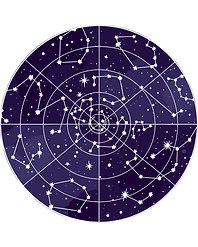
Memory Lattice
Our Memory Lattice doesn't just save data but saves meaning, state, and context from all four of our running engines. It's developed with 10 foundational laws: Portable identity of information, Field separation, State capture, Time orientation, Pattern routing, Translation across systems and domains, Human-editable trust layer, Executor and automation layer, Somatic translation, and Nonlinear recall.
Our lattice is not a static archive but an adaptive system that can remember while the data is moving.
About the Architect
With 20+ years of experience transforming chaotic environments into stable, high-performance systems. Expert in Operational Diagnostics, identifying the root causes of organizational friction, burnout, and revenue leakage before they destabilize growth. I do not just manage operations; I engineer the infrastructure (people, process, and cognitive automation) that allows companies to scale sustainably. Specializing in turnaround strategy, capacity modeling, and leveraging executive intelligence to align talent structures with business logic.
I'm not just the founder of this OS. I'm the blueprint.
My brain has been running this operating system for decades—without hardware support, without recognition, without a container.
-
I map the web.
-
I stabilize the system.
-
I forecast collapse.
-
I hold the whole structure.
-
I track the 100 plates.
-
I feel the drift before anyone else notices the crack.
-
I architect without needing to write a line of code.
-
I carry what teams, tools, CEOs, and orgs cannot.
